When your academic future depends on a single document, the last thing you want is a translation that gets rejected. Whether you are applying to a U.S. university, sponsoring a family member’s school enrollment, or preparing credentials for a professional licensing board, finding the right educational translation providers can make or break your entire application.
The demand for reliable academic translation has surged across the United States. Immigration rates are rising, international student enrollment continues to grow, and state licensing boards are becoming stricter about the documentation they accept. As a result, the market is flooded with translation services — some excellent, many unreliable, and a few that can seriously damage your chances of approval.
This guide gives you everything you need. It defines what certified educational translation actually means, walks you through the qualities that separate trustworthy providers from risky ones, and gives you a proven checklist to use before hiring anyone. If you are in Oregon or anywhere across the U.S., this resource was written specifically for you.
What Is Certified Educational Translation and Why Does It Matter?
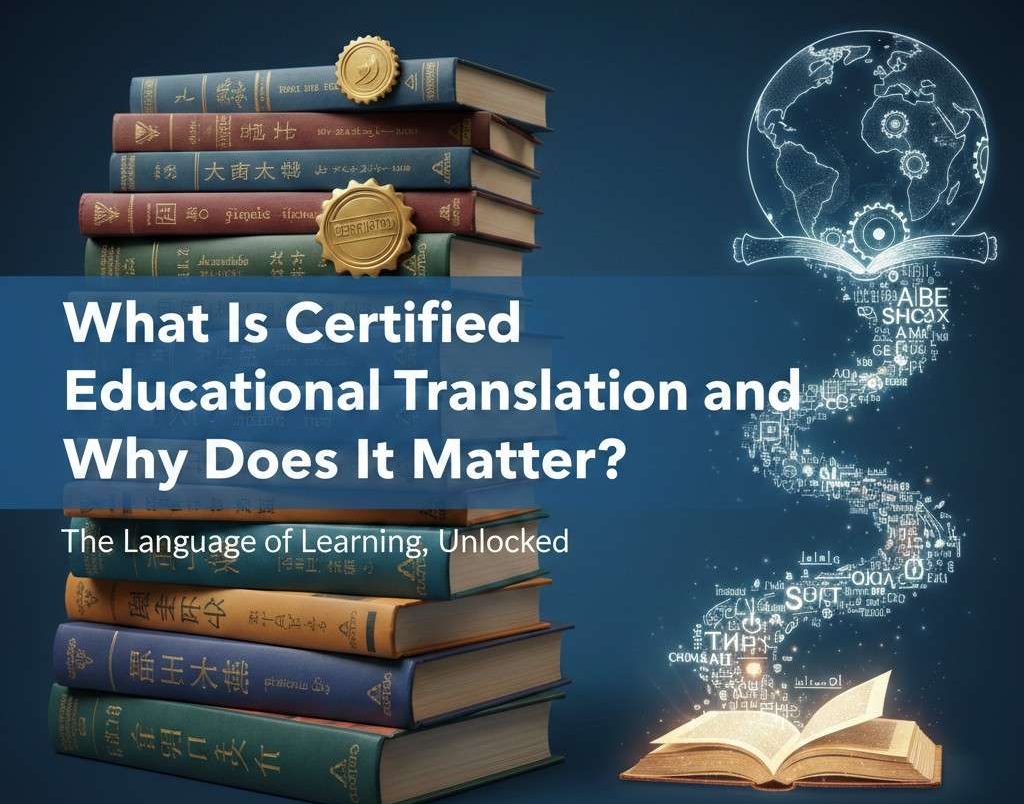
Certified educational translation is the process of converting academic documents from one language into another, accompanied by an official statement from the translator or translation company confirming that the translation is accurate and complete. This signed certification is what institutions, immigration agencies, and licensing boards look for before accepting your documents.
Without certification, your transcript is just paper. With it, your document becomes an officially recognized record that U.S. institutions can evaluate with confidence.
The need for educational translation providers arises most often when students and families from non-English-speaking countries apply to American schools or universities, seek professional licenses, or go through immigration processes that require verified academic records. In all of these cases, only a certified translation will be accepted.
Common documents that require certified academic translation include high school diplomas and transcripts, university degrees and mark sheets, language proficiency certificates, report cards and school enrollment records, vocational training certificates, and letters of recommendation from foreign institutions.
Why Choosing the Wrong Provider Is a Costly Mistake
Many people make the mistake of treating all translation services as equal. They search for the cheapest option, hire a bilingual friend, or use a machine translation tool — and then face rejection weeks or even months later when the institution flags the document as unacceptable.
This is not a minor inconvenience. A rejected translation can delay university enrollment by an entire semester. It can pause an immigration case. It can cost you a job offer that required verified foreign credentials. The damage goes far beyond the cost of retranslation.
Reputable educational translation providers understand the exact formatting standards, legal requirements, and institutional expectations that make a translated document acceptable. They do not guess. They know — because they have done it hundreds or thousands of times before.
Choosing the right provider from the start saves you time, money, and stress. It also gives you the peace of mind that comes from knowing your documents are in expert hands.
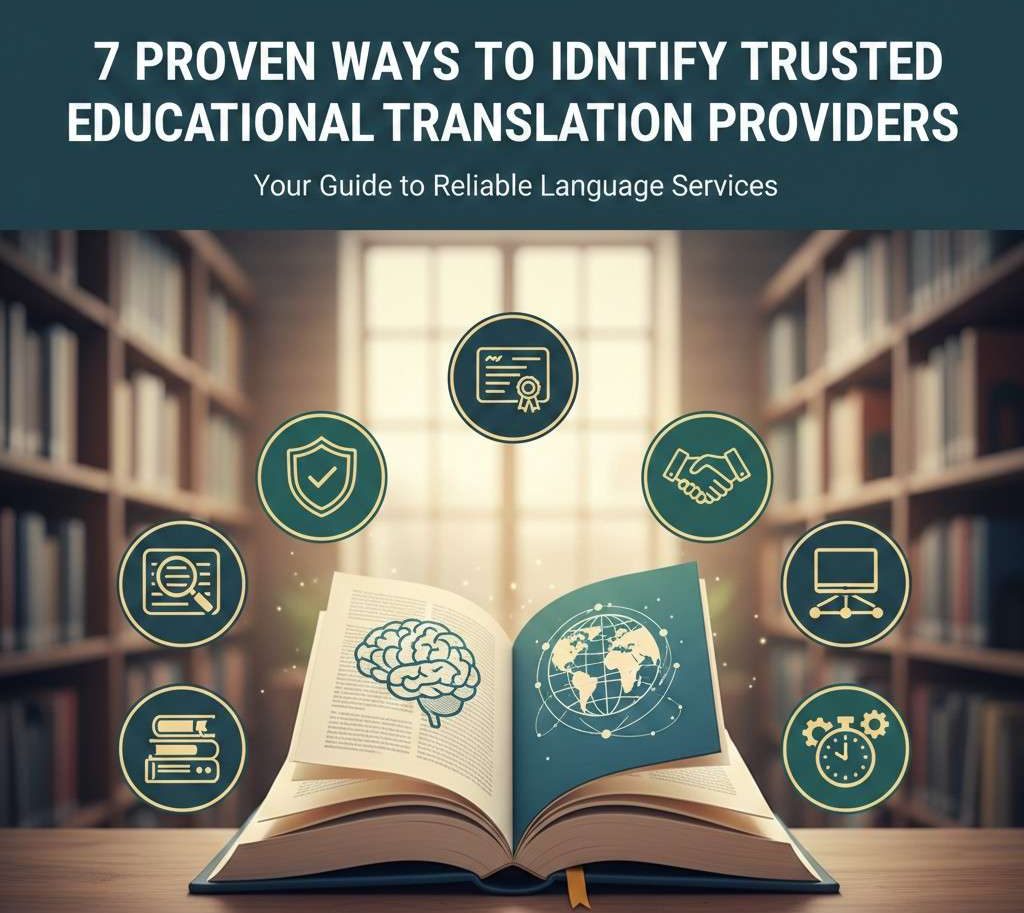
7 Proven Ways to Identify Trusted Educational Translation Providers
1. Look for Specialization in Academic and Educational Documents
Not every translation agency handles academic records. Many focus on legal contracts, marketing content, or technical manuals. When you are dealing with transcripts, diplomas, and credential evaluations, you need educational translation providers who specialize in this exact area.
Specialization matters because educational documents come with unique challenges. Grading systems differ between countries. Degree titles do not always translate directly. Institutional names must be rendered precisely. A generalist translator may not be equipped to handle these nuances correctly.
Ask any provider directly whether they have experience with academic credential evaluation. If they cannot point to specific examples or explain how they handle grading equivalency, look elsewhere.
2. Verify ATA Affiliation or Recognized Credentials
The American Translators Association, commonly known as the ATA, is the leading professional organization for translators in the United States. ATA member translators are held to a rigorous code of ethics and many have passed demanding certification exams in their specific language pairs.
When evaluating educational translation providers, checking for ATA affiliation is one of the quickest ways to filter out unqualified candidates. The ATA maintains a searchable online directory that allows you to verify membership and find translators by language pair and specialization.
That said, ATA membership is not the only credential worth recognizing. Many excellent providers employ accredited language professionals who meet equally high standards through other recognized bodies or through years of specialized experience in academic and educational translation.
3. Confirm a Certificate of Accuracy Is Always Included
Every legitimate certified translation must include a Certificate of Accuracy. This is a formal, signed statement from the translator or agency attesting that the translation is a true, complete, and accurate representation of the original document.
This certificate must include the translator’s full name, contact information, signature, and the date of certification. Without it, USCIS, U.S. colleges, state licensing boards, and most educational institutions will not accept the translation regardless of its quality.
Be cautious of any educational translation providers that treat the Certificate of Accuracy as an optional add-on or charge extra for it. It is a fundamental part of any legitimate certified translation service and should always be included as standard.
4. Assess Their Knowledge of Source Country Academic Systems
One of the most overlooked qualities in educational translation providers is familiarity with the academic system of the source country. A translator who is fluent in Mandarin but unfamiliar with the Chinese university grading system may produce a translation that is linguistically accurate but academically meaningless to a U.S. admissions office.
Strong educational translation providers invest in subject-matter expertise. They understand how the French Baccalauréat compares to a U.S. high school diploma, how Indian mark sheets are structured, and how to correctly translate degree classifications from British or Australian universities.
When you are evaluating a provider, ask them specifically about their experience with documents from your country of origin. Their answer will tell you a great deal about how prepared they truly are.
5. Read Reviews With a Critical Eye
Online reviews are valuable — but only if you know how to interpret them. When researching educational translation providers, do not stop at the star rating. Read the actual content of the reviews and look for specifics.
The most trustworthy reviews mention outcomes. Comments like “my transcript was accepted by Oregon State University on the first submission” or “USCIS processed our case without any translation issues” are far more meaningful than generic praise about fast service or friendly staff.
Watch for red flags as well. An unusual spike in five-star reviews posted within a short time frame, reviews that sound scripted or vague, and a complete absence of any mention of academic or educational translation use cases are all warning signs. Cross-reference reviews across Google, Yelp, Trustpilot, and the Better Business Bureau before making any decision.
6. Evaluate Turnaround Time and Confidentiality Practices
Academic documents often come with tight deadlines. University application windows close. Visa appointments are scheduled. Licensing board submissions have firm due dates. This means turnaround time is not just a convenience — it is often a necessity.
Reliable educational translation providers offer both standard and rush delivery options. Standard delivery typically ranges from three to five business days, while rush services can often be completed within 24 to 48 hours without any reduction in accuracy or quality.
Equally important is confidentiality. Your academic records, transcripts, and personal identification documents contain sensitive information. Any provider you work with should have a clearly stated privacy policy that outlines how your documents are stored, handled, and protected. Never share sensitive materials with a provider that cannot give you a clear answer about data security.
7. Demand Transparent, Itemized Pricing
Pricing in the translation industry varies widely, and hidden fees are unfortunately common. Reputable educational translation providers will always offer transparent, itemized quotes before any work begins. You should know exactly what you are paying for — including the translation itself, the Certificate of Accuracy, proofreading, and any formatting work required.
Industry-standard rates typically fall between $0.10 and $0.20 per word, or a flat per-page rate depending on the document type. If a provider quotes significantly below this range, treat it as a warning sign. Extremely low rates often indicate the use of raw machine translation with little to no human review — a shortcut that almost always results in errors that get documents rejected.
At Global Doc Translations, we provide fully itemized quotes with zero hidden fees. Our pricing is competitive, our quality is guaranteed, and every translation comes with a Certificate of Accuracy at no extra charge.
Bonus: Questions to Ask Any Educational Translation Provider Before You Hire
Before committing to any service, take five minutes to ask these questions directly. Ask whether they specialize in educational and academic document translation, how long they have been providing this type of service, and whether they have experience with documents from your specific country. Confirm that a Certificate of Accuracy is included as standard, understand their revision or rejection policy, and ask whether they offer notarization or apostille services if your destination institution requires it. Finally, make sure your personal information is protected under a clear confidentiality policy.
A trustworthy provider will answer every question confidently and without hesitation. Evasive answers, vague responses, or frustration at being asked are serious warning signs.
Why Global Doc Translations Is Oregon’s Most Trusted Choice
At Global Doc Translations, we have built our reputation on one promise: accurate, accepted, and professionally certified translations delivered on time. Our Oregon-based team of accredited language professionals specializes in educational translation providers services for students, families, and professionals across the United States.
We handle everything from foreign diploma translation and university transcript authentication to complete academic records packages for USCIS submissions. Every document we translate comes with a signed Certificate of Accuracy, meticulous formatting that mirrors the original, and the assurance that your submission will meet institutional standards.
Our clients range from international students applying to Portland-area universities to families navigating the immigration process, to professionals seeking state licensure with foreign credentials. In every case, we deliver the same high standard of care, precision, and confidentiality.
We also offer 24/7 customer support, rush delivery options, a 100% free quote with no obligation, and complete transparency in our pricing. There are no surprises, no hidden fees, and no compromises on quality.
Conclusion: Your Documents Deserve the Best
Finding reliable educational translation providers does not have to feel overwhelming. When you know what to look for — academic specialization, ATA credentials, certified accuracy statements, source-country knowledge, transparent pricing, and strong reviews — the right choice becomes clear.
Your academic documents represent years of hard work, dedication, and achievement. They deserve to be translated by professionals who take that responsibility seriously.
Do not risk rejection. Do not settle for the cheapest option. Choose a partner who understands what is at stake and has the expertise to get it right the first time.
Ready to get started? Visit globaldoctranslations.com today for a free quote and experience the difference that true expertise makes. Our team is ready to help you move forward — accurately, confidently, and on time.
Global Doc Translations is an Oregon-based translation services company specializing in certified, sworn, legal, medical, and educational document translation. Our accredited language professionals serve clients across the United States with 24/7 support and USCIS-accepted translations with guaranteed accuracy.
Website: globaldoctranslations.com | WhatsApp: +1 (503) 709-3618