
If you have ever searched for language services online, chances are you have come across both the terms “translation” and “interpretation.” Most people use translation and interpretation interchangeably, but they are actually two very different professional services.
Understanding the difference between translation and interpretation is not just a matter of vocabulary. It is a practical need, especially if your business, organization, or personal situation requires accurate multilingual communication.
At Global Doc Translations (globaldoctranslations.com), we specialize in both translation and interpretation services that are accurate, reliable, and fast. In this blog, we walk you through 5 powerful differences between translation and interpretation so you can make the smartest decision for your needs.
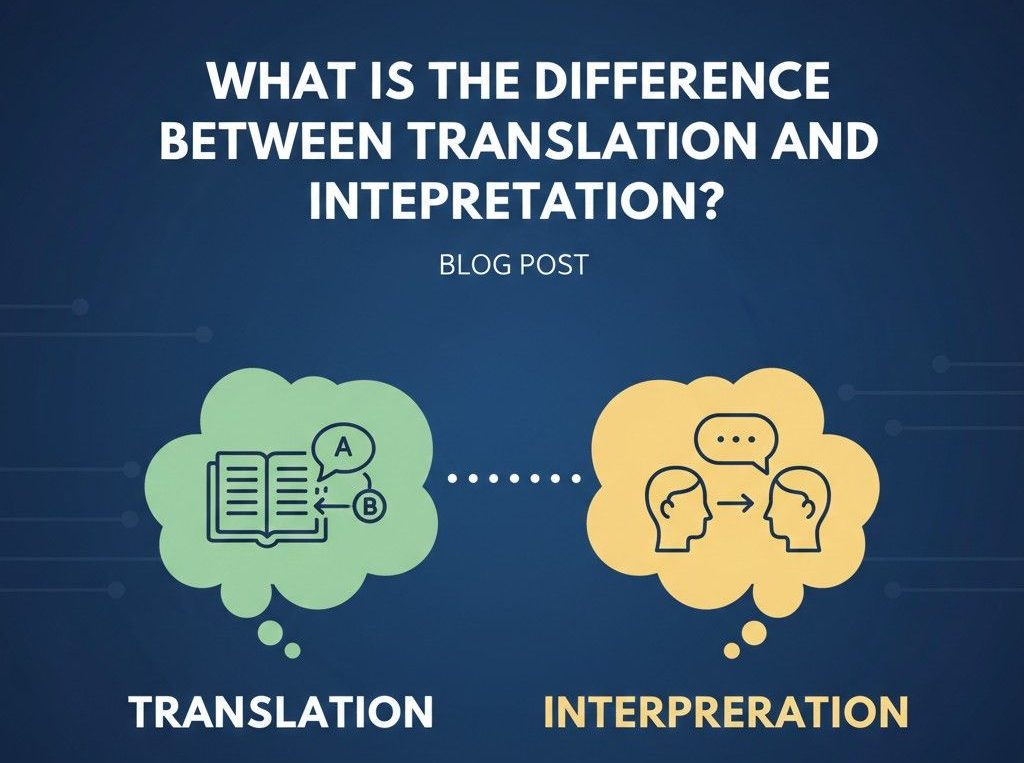
What Is the Difference Between Translation and Interpretation?
Before diving into the specific differences, let us first understand what translation and interpretation each mean on their own.
Translation refers to the conversion of written content from one language (the source language) into another language (the target language). Document translation includes legal contracts, medical records, academic certificates, business reports, websites, and more.
Interpretation, on the other hand, refers to the real-time conversion of spoken language. A professional interpreter listens to verbal communication in one language and instantly delivers the message in another language.
In the simplest terms: translation is written, interpretation is spoken. This is the heart of the translation and interpretation distinction, and everything else flows from this single point.
1. The Medium: Written vs. Spoken
The first and most fundamental difference between translation and interpretation is the medium in which they operate.
Translation and interpretation serve two completely different communication channels. Translation deals with written text, while oral interpretation deals with live, spoken words.
A professional translator works with documents. They read the source material carefully, research terminology, and craft a written version in the target language. They have the luxury of time to review, revise, and refine every sentence.
A professional interpreter, however, works in the moment. Whether in a courtroom, a hospital room, or an international business meeting, the interpreter must listen and speak simultaneously or consecutively, leaving no room for lengthy review.
This core distinction in the medium is what makes translation and interpretation two separate career paths, requiring different skill sets, tools, and training.
2. The Timing: Real-Time vs. Deliberate Process
Another major difference in translation and interpretation is the timing involved in delivering the final output.
Translation is a deliberate, methodical process. A certified translator receives the source document, works through it section by section, and delivers a polished, accurate final product. Depending on the complexity and length of the document, this process can take hours, days, or even weeks.
Interpretation, by contrast, happens in real time. There is no “pause” button during a live conference or medical consultation. The interpreter must process incoming speech and deliver meaning instantly in the target language.
This difference in timing also affects how errors are handled. In translation and interpretation, mistakes carry different consequences. A translator can catch and correct errors before delivery. An interpreter must recover mid-speech without disrupting the flow of communication.
This is why translation and interpretation professionals must each undergo specific, specialized training for their respective fields.
3. The Skill Set: Precision vs. Spontaneity
When it comes to translation and interpretation, the professional skills required are quite different, even though both demand an exceptional command of at least two languages.
A skilled translator must have strong writing abilities in the target language. They must understand grammar, cultural nuance, tone, and industry-specific terminology. For example, legal translation and interpretation require deep familiarity with legal systems, while medical translation and interpretation demand knowledge of clinical and anatomical vocabulary.
A skilled interpreter, on the other hand, must have outstanding listening, memory, and speaking skills. They must process complex ideas rapidly and deliver them clearly, all without missing a beat. Interpreters often rely on note-taking techniques, especially in consecutive interpreting, to capture key points before speaking.
Both translation and interpretation professionals must also be cultural mediators. Language is deeply tied to culture, and both translators and interpreters must bridge not just words, but meaning, context, and intent.
At Global Doc Translations, our team of experts is trained in both translation and interpretation, ensuring you always receive service that is linguistically accurate and culturally appropriate.
4. The Format: Document vs. Live Session
Translation and interpretation are also delivered in very different formats.
Document translation is delivered as a finalized written file. This could be a certified translation of a birth certificate, a localized version of a corporate website, a translated legal agreement, or a multilingual product manual. The client receives a completed document they can use, submit, or publish.
Interpretation services are delivered live, in person or remotely via phone or video. There are two primary types of interpretation:
Simultaneous Interpreting — The interpreter speaks at the same time as the original speaker, with only a slight delay. This format is common at international conferences, United Nations sessions, and large multilingual events. Simultaneous interpreting demands peak concentration and is typically done in short shifts.
Consecutive Interpreting — The interpreter waits for the speaker to pause, then delivers the message in the target language. This format is widely used in business meetings, legal proceedings, and medical appointments. Consecutive interpreting allows for greater accuracy and is the most common form of oral interpretation.
Understanding these formats is key when choosing between translation and interpretation for your specific situation. If you need a signed document or a deliverable file, you need translation. If you need someone present during a live conversation, you need interpretation.
5. The Tools and Technology Used
Translation and interpretation also differ significantly in the tools and technology professionals use.
Translators frequently use Computer-Assisted Translation (CAT) tools, translation memory software, glossaries, and terminology databases. These tools help maintain consistency across large documents and reduce turnaround time without compromising quality. Certified translation for official documents may also involve specific formatting and notarization requirements.
Interpreters, particularly those performing simultaneous interpreting at large events, rely on audio equipment, headsets, interpreter booths, and microphones. Remote interpreting has grown significantly, with platforms enabling real-time language services over video calls and teleconferences.
Both fields are rapidly evolving with the rise of AI and machine translation. However, human expertise remains irreplaceable when accuracy, tone, legal validity, and cultural sensitivity are essential. That is exactly what Global Doc Translations delivers — human-powered translation and interpretation services backed by technology for speed and consistency.
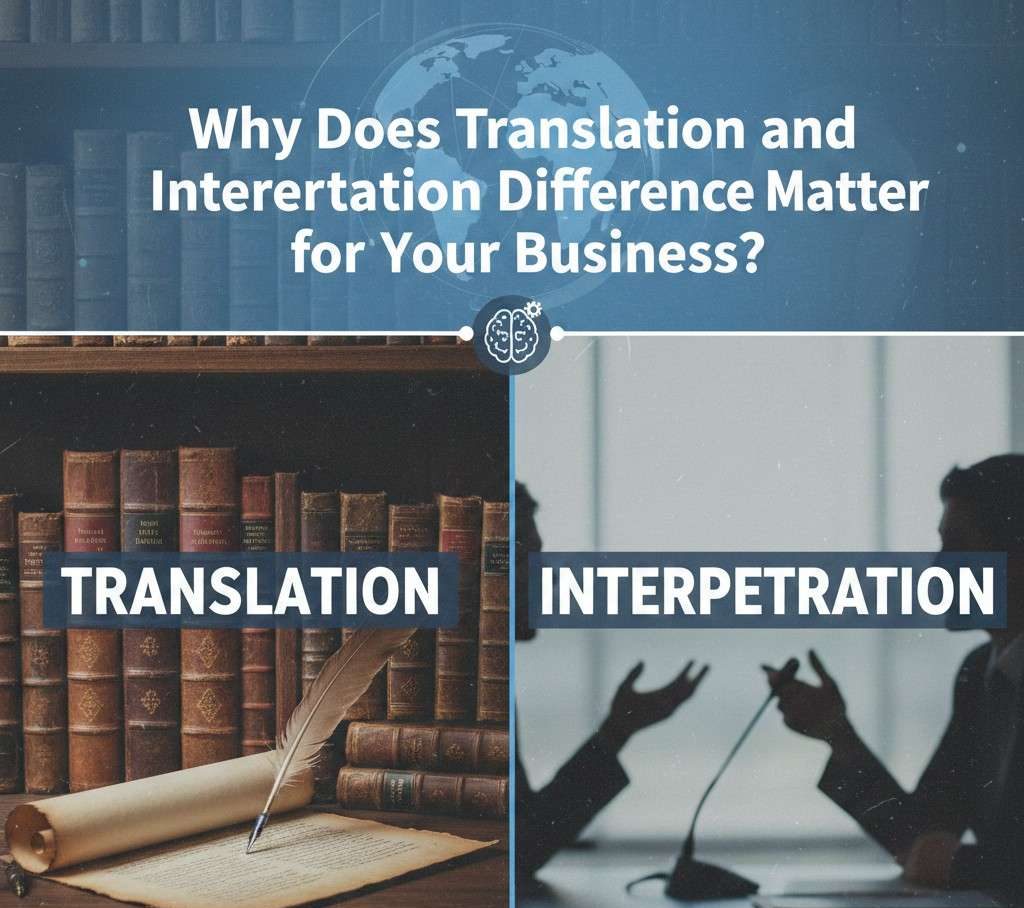
Why Does This Difference Matter for Your Business?
Now that you understand the 5 powerful differences between translation and interpretation, you might be asking: why does this matter for me?
The answer is straightforward. Choosing the wrong service can lead to miscommunication, legal complications, delays, and unnecessary costs.
If you submit a spoken recording to a translation agency expecting a certified document, you will not get what you need. If you hire a document translator to handle a live medical consultation, the outcome could be seriously harmful.
Knowing exactly what translation and interpretation each offer means you can request the right service from the start — saving time, money, and frustration.
At Global Doc Translations, we make it easy. Whether you need certified document translation or a professional interpreter for a live session, our team is ready to deliver accurate, reliable, and fast language services tailored to your exact needs. Visit us at globaldoctranslations.com to get started today.
Final Thoughts: Translation and Interpretation Are Both Essential
Translation and interpretation are two sides of the same coin. Both serve the vital purpose of breaking down language barriers and enabling clear, effective communication across cultures and borders.
Translation and interpretation are not competing services — they are complementary ones. Many businesses, legal firms, healthcare providers, and international organizations rely on both at different stages of their operations.
The key is knowing which service fits your specific situation. And when you need either or both, Global Doc Translations is your trusted partner for professional, certified, and fast language solutions.
Visit globaldoctranslations.com today and let us handle your translation and interpretation needs with the expertise and care your communication deserves.