
Anyone who has tried to move a document from one country into a completely different legal system knows the feeling of staring at a form and wondering whether it will actually be accepted on the other side. If you are dealing with visas, marriage registration, adoption, business registration, education, or a legal claim that touches South Korea, you have probably already discovered that a plain translation is rarely enough. Korean authorities and Korean missions abroad expect a specific kind of certification, and that is exactly why so many people search for guidance on how to notarize documents for South Korea before they submit anything at all.
This guide walks through the entire process in plain language, based on the official procedure published by Korean diplomatic missions, so you can see exactly what is expected, what usually goes wrong, and how a professional translation partner fits into the picture. Whether you are an individual applying for a family visa or a company preparing a power of attorney for a Korean subsidiary, the goal is the same: to notarize documents for South Korea correctly the first time, without wasted trips, rejected paperwork, or unnecessary delays.
Understanding What It Means To Notarize Documents For South Korea
Before anything else, it helps to separate three ideas that people often mix together: notarization, authentication, and legalization. When you notarize documents for South Korea through a Korean embassy or consulate, you are usually asking a consular officer to witness a sworn statement, most commonly an affidavit confirming that a translation is a true and accurate rendering of the original document. The officer is not checking whether the content of the document is correct. The officer is only confirming the identity of the person signing and the fact that the signature happened in front of them.
This distinction matters. Many applicants assume that once they notarize documents for South Korea, the consulate has vouched for the truth of the underlying facts. That is not the case. The officer’s seal only confirms that a real person, verified with valid photo identification, signed the affidavit voluntarily in front of them. The accuracy of the translation remains the responsibility of the person who signs.
Separately, South Korea has been a member of the Hague Apostille Convention since 2007. That means documents issued inside Korea for use in another member country can often be authenticated with a simple apostille rather than going through embassy legalization. However, when the destination is South Korea itself, and the applicant is located overseas, the standard route is the notarial affidavit process handled directly by the nearest Korean embassy or consulate, which is why so many applicants specifically need to notarize documents for South Korea rather than rely on an apostille alone.
Who Typically Needs To Notarize Documents For South Korea
People reach out to notarize documents for South Korea for a wide variety of reasons, and the list keeps growing as more families, students, and businesses build connections with Korea. Some of the most common situations include international marriage registration, where a birth certificate, single status affidavit, or divorce decree must be translated and certified. Others include adoption cases, inheritance matters, court proceedings, and criminal record checks required for a long term visa or employment permit.
On the business side, companies often need to notarize documents for South Korea when establishing a branch office, appointing a local representative, or submitting board resolutions and registration papers. Universities and licensing bodies in Korea may also request notarized translations of diplomas and transcripts before recognizing foreign qualifications.
Because the requirements can vary slightly depending on the specific Korean government office receiving the document, it is always worth confirming with that office directly what level of certification they expect. Some offices accept a private certified translation without any embassy involvement, while others insist that you notarize documents for South Korea through the consular affidavit process before they will process an application.
The Documents That Usually Require This Process
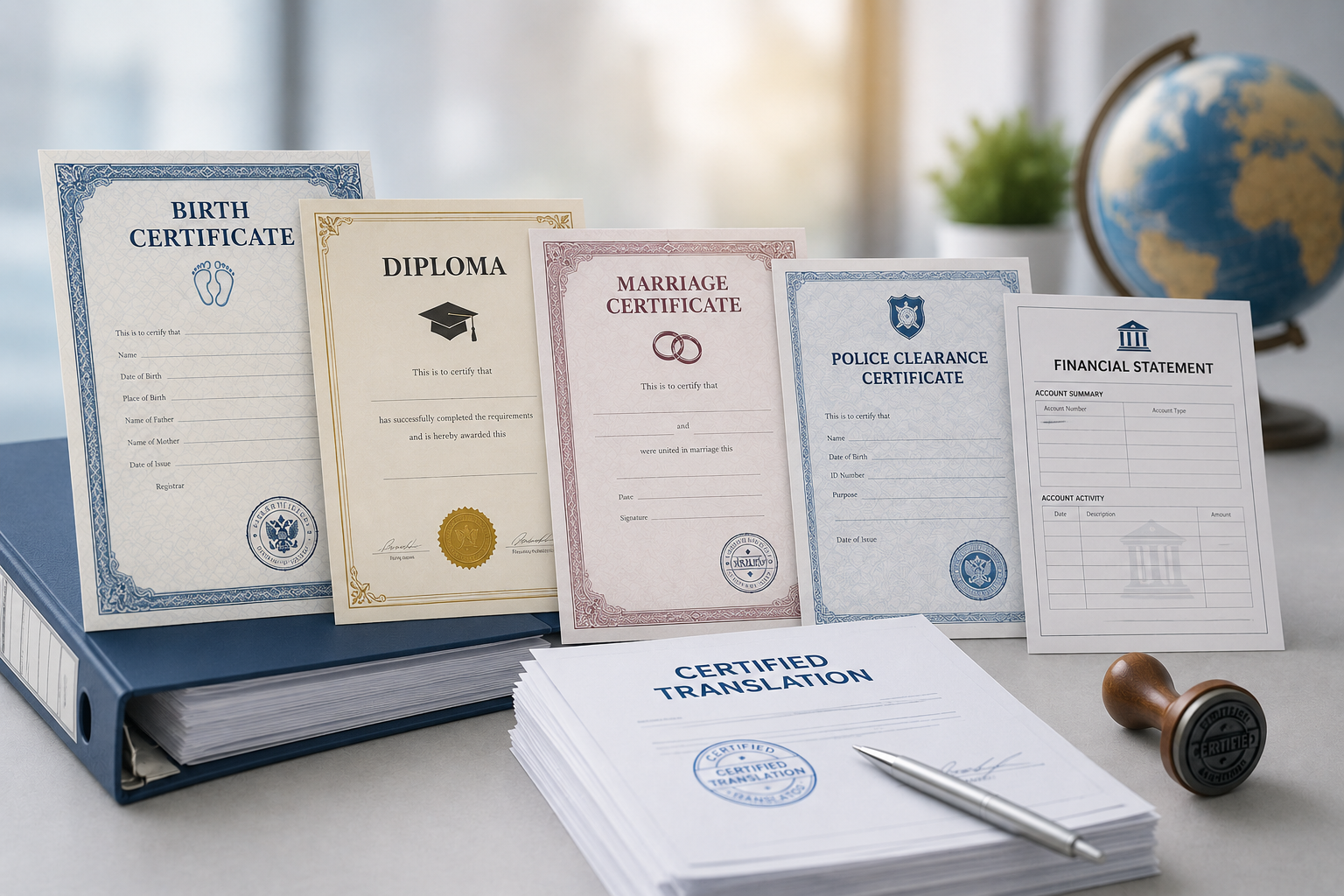
Not every document needs the same treatment, and knowing the difference in advance saves a great deal of time. Personal documents that commonly need to notarize documents for South Korea include family relation certificates, marriage certificates, birth certificates, divorce judgments, driving licenses, academic diplomas, and criminal background checks. These are usually straightforward because the original document is already an official government record, and the notarization step focuses mainly on certifying the translation.
Private documents tend to be a little more involved. A power of attorney, a company contract, a shareholder resolution, or a personal declaration is not automatically backed by any government seal, so these documents typically need both the underlying signature and the translation to notarize documents for South Korea properly. In many cases the signer must appear in person before the consular officer with valid identification so the officer can witness the signature directly, rather than only witnessing a statement about a translation.
It is worth repeating that government issued documents, such as an official criminal record extract or a certified copy of a family register, often do not require a separate notarization step at all if they already carry an official seal recognized by Korean authorities. This is one of the most common points of confusion, and double checking with the receiving Korean office before you notarize documents for South Korea can save an unnecessary appointment.
Step One: Prepare The Original Document
The very first step to notarize documents for South Korea is making sure the original document is complete, valid, and unaltered. Consular staff will not accept documents with missing pages, unclear stamps, or expired validity periods. If the original document requires a specific issuing authority seal or a raised stamp, confirm this is present before your appointment. Any document containing corrections, cross outs, or handwritten additions is very likely to be rejected on the spot, so it pays to review every page carefully in advance.
If you plan to submit multiple documents in a single visit, organize them clearly and keep the corresponding translations attached to each original. Consular officers process a high volume of appointments every day, and a well organized submission moves through the process far more smoothly than a disorganized stack of loose papers. This single piece of preparation is one of the simplest ways to notarize documents for South Korea without losing an entire afternoon to avoidable back and forth.
Step Two: Obtain An Accurate, Professional Translation
Since the consular officer witnesses an affidavit stating that a translation faithfully reflects the original, translation quality is the single most important variable in the process. Machine translated text or a translator unfamiliar with Korean legal vocabulary can lead to rejection, resubmission, or a document later challenged by a Korean authority.
This is precisely the stage where a professional translation service becomes essential rather than optional. A translator experienced with Korean government requirements understands exactly how names, dates, official titles, and legal terminology should be rendered so that the finished document will notarize documents for South Korea without triggering additional questions. At Global Doc Translations, our team works specifically with the kind of vital records, corporate paperwork, and legal filings that Korean missions handle every day, which means the translations we prepare are built from the outset to survive consular scrutiny.
A good translation also anticipates formatting requirements, such as matching the layout of the original, clearly labeling stamps and seals that appear in the source language, and avoiding any summarizing or omission of content. When people search for help to notarize documents for South Korea, what they usually need first is a translation that a consular officer will accept without hesitation, and that starts with choosing a translator who has actually handled Korean consular submissions before.
Step Three: Complete The Document Before Your Appointment
One detail that catches many applicants off guard is that documents must be fully completed before arriving at the embassy or consulate, with the sole exception of the signature that will be witnessed. Every other field, date, and attachment should already be filled in. If you plan to notarize documents for South Korea and you show up with blank sections still needing to be completed, the appointment may be postponed or refused outright.
If your document requires witnesses in addition to your own signature, you are responsible for bringing those witnesses yourself, since consular staff cannot serve as a witness or offer legal advice about your content. When you notarize documents for South Korea, remember that the officer’s role is strictly limited to confirming identity and witnessing the signing, so any questions about content belong with your translator or legal advisor.
Step Four: Schedule Your Appointment And Bring Valid Identification
Most Korean embassies and consulates require an appointment before you can notarize documents for South Korea, and walk in requests are frequently declined, particularly at busier missions. When you book, you will typically need to provide the names of everyone who will sign, including any witnesses or co signers, so the consular section can prepare the correct paperwork in advance.
On the day of your appointment, bring a valid government issued photo identification that matches the name appearing on your documents exactly. A passport is usually the safest choice, though a national identity card may also be accepted depending on the mission. If the name on your identification differs from the name on your documents, for example due to a legal name change, bring supporting evidence of that change, since a mismatch is one of the fastest ways to have an appointment turned away before you even get to notarize documents for South Korea.
Step Five: Pay The Applicable Fee
Notarial services are not typically free, and the fee usually applies per seal or per signature witnessed rather than per document, so a submission with several signatures can add up quickly. Fees vary between missions and are payable in local currency, sometimes only by card or through an online portal completed in advance. Always confirm the current fee schedule before you notarize documents for South Korea, and keep your payment confirmation with you, since many missions require proof of payment at the start of the appointment rather than accepting payment on site.
Step Six: Sign In Front Of The Officer To Notarize Documents For South Korea
This is the heart of the process. You, and any required witnesses, will sign the affidavit or document in the physical presence of the consular officer, who then applies their official seal or signature to confirm the act took place. It is essential that you do not sign in advance, since the entire value of the process comes from the officer directly observing the signature. Whenever people ask how to notarize documents for South Korea correctly, this single rule, do not pre sign anything, is one of the most important pieces of advice a translation or legal advisor can give.
The officer will typically also verify that your identification matches the signatory named in the document before allowing the signing to proceed. Once the signature is witnessed and the seal is applied, your document has been formally notarized according to the consular process, and it can then be submitted to the relevant authority in Korea or attached to whatever application prompted the requirement in the first place.
What Happens After You Notarize Documents For South Korea
Once the affidavit has been signed and sealed, the consular officer will return the completed papers to you, sometimes with a receipt confirming the fee paid. Some Korean government offices accept the notarized package as final, while others require an additional step, such as submission to the Ministry of Foreign Affairs for further authentication.
It is a common misunderstanding that a notarized affidavit completes every requirement. The office receiving your paperwork in Korea may still request original documents or further verification, so confirm the complete list of requirements before you notarize documents for South Korea, rather than assuming the consular step is final.
Five Costly Mistakes People Make When They Notarize Documents For South Korea
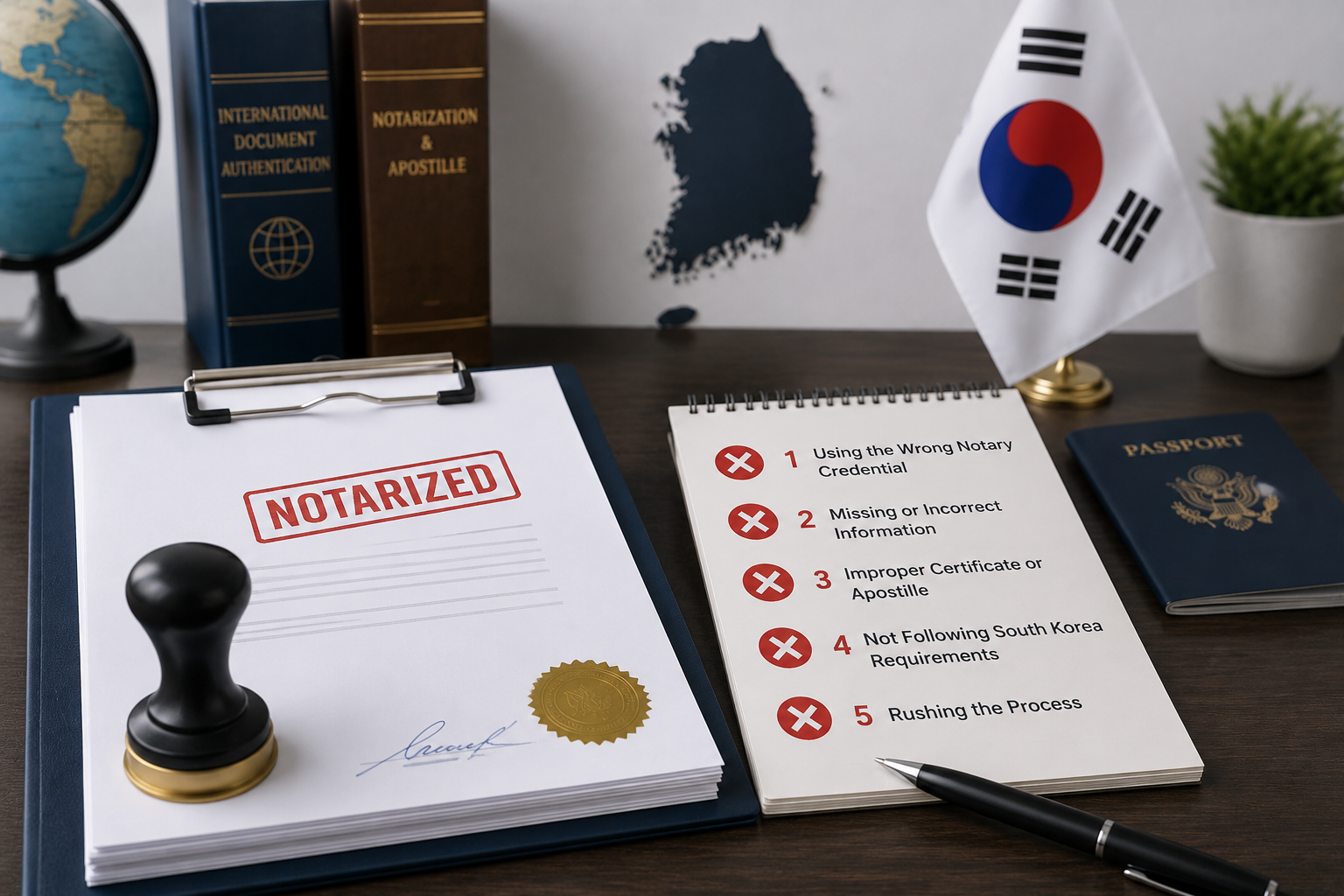
Even with clear instructions available, a surprising number of applicants run into avoidable problems when they try to notarize documents for South Korea.
The first costly mistake is signing the document before the appointment, which invalidates the entire purpose of the process and forces a complete restart.
The second is bringing a translation that has not been prepared by someone familiar with Korean administrative language, leading to rejected affidavits or, worse, documents that are accepted but later questioned by the receiving authority in Korea.
The third mistake is arriving without the correct identification, or with identification that does not match the name on the document due to marriage, divorce, or a legal name change that was never documented.
The fourth is underestimating how long the entire process takes, since scheduling an appointment, preparing a proper translation, and allowing time for any follow up authentication in Korea can take considerably longer than expected if you start at the last minute.
The fifth costly mistake is assuming every document needs the same treatment, when in fact government issued records and private documents often follow different paths to notarize documents for South Korea.
Avoiding these five mistakes is largely a matter of planning ahead when you notarize documents for South Korea, and working with people who have handled this process many times before. A single missed detail, such as an unsigned witness line or an outdated passport, can turn a routine appointment into weeks of delay.
How A Professional Translation Partner Makes This Easier
Given how much of the process depends on translation quality, working with a translation provider that understands the Korean consular system from the very beginning can prevent nearly every common mistake people make when they notarize documents for South Korea. At Global Doc Translations, our approach starts with matching your document type, whether it is a birth certificate, a corporate power of attorney, a court judgment, or an academic transcript, to a translator with direct experience preparing that category of paperwork for Korean authorities.
We format translations to mirror the original layout, clearly note every stamp, seal, and signature block that appears in the source document, and use terminology consistent with how Korean government offices actually phrase these concepts, rather than a literal word for word rendering that might confuse a reviewing officer. When clients come to us needing to notarize documents for South Korea, we also advise on which category their document falls into, personal or private, government issued or independently signed, so they know in advance whether they will need to bring witnesses or simply their own valid identification.
This kind of preparation to notarize documents for South Korea does more than save a single appointment. It protects the entire chain of an application, whether that application is a marriage registration, a business license, a court filing, or a university credential evaluation, since a rejected or questioned translation at any point can delay the whole process by weeks or months.
Frequently Asked Questions
Do I need to notarize documents for South Korea if my document is already in English.
It depends on the receiving authority. Some Korean offices accept English documents without further translation, while others still require a Korean translation regardless of the source language. Always confirm directly with the requesting office.
Can the embassy provide the translation for me before I notarize documents for South Korea.
No. Consular sections generally do not provide translation services. You are responsible for arranging your own translation, which is exactly why working with an experienced translation provider before your appointment is so valuable.
How long does it take to notarize documents for South Korea from start to finish.
This depends on how quickly you can arrange a translation, how far ahead you can book an appointment, and whether extra authentication is required afterward. Building in extra time is the safest approach.
What happens if my identification does not match the name on my document.
Bring supporting evidence of any legal name change, such as a marriage certificate or court order, since a mismatch between your identification and your document is one of the most common reasons an appointment cannot proceed.
Is an apostille the same as the process needed to notarize documents for South Korea.
Not necessarily. An apostille generally applies to documents issued within one Hague member country for use in another. When you need to notarize documents for South Korea from abroad, the consular affidavit process is typically the required route instead.
Final Thoughts
Learning how to notarize documents for South Korea does not need to be overwhelming once you understand the sequence involved: prepare a complete and unaltered original, secure an accurate professional translation, complete every field except the signature, schedule an appointment with valid identification in hand, pay the required fee, and sign only in front of the consular officer. Each step protects the integrity of the final document and ensures Korean authorities will accept it without unnecessary delay.
For families navigating marriage registration, students pursuing recognition of their qualifications, or companies establishing a presence in Korea, the stakes of getting this process right when you notarize documents for South Korea are simply too high to leave to chance. Working with a translation partner who already understands how Korean missions review these submissions removes much of the guesswork, and it means you can walk into your appointment with confidence rather than uncertainty.
If you are preparing to notarize documents for South Korea and want translations built specifically to meet consular expectations, Global Doc Translations is ready to help you prepare accurate, properly formatted documents so your appointment goes smoothly the very first time.