
If you studied outside the United States and now plan to apply to an American school, work, or file immigration paperwork, you will almost certainly need to translate diploma for US university admissions. Almost every registrar, credential evaluator, and immigration office in the country asks for an English version of your academic records before they will even open your file. Understanding how to translate diploma for US university requirements the right way can save you weeks of delay, prevent a rejected application, and protect you from paying for a service twice.
This guide walks you through everything you need to know to translate diploma for US university admissions offices, employers, and government agencies. We will cover why certified translation matters, how the process works, what mistakes to avoid, and how to choose a provider you can trust.
Why You Need to Translate Diploma for US University Admissions
Most American colleges and universities do not accept documents written in a language other than English. If your diploma was issued in Spanish, Arabic, Mandarin, Portuguese, French, or any other language, the admissions office cannot legally or practically evaluate it without an English version. This is the core reason applicants must translate their diploma for US university admissions before submitting any paperwork.
Beyond simple language conversion, schools want assurance that the translation is accurate and complete. That is why nearly every institution asks for a certified translation rather than a version you produced yourself or one done by a friend who happens to speak both languages. When you translate a diploma for US university purposes, the translator or agency typically signs a statement confirming the translation is accurate and complete to the best of their ability. This certification is what gives the document legal weight in the eyes of admissions officers, immigration officers, and licensing boards.
It is worth noting that the requirement to translate a diploma for US university programs applies whether you are applying as an undergraduate, a graduate student, a transfer student, or even a professional seeking licensure. Medical boards, nursing boards, engineering associations, and teaching certification bodies all commonly require certified translations of academic credentials as part of their review process.
Certified Versus Notarized: What US Universities Actually Want
One of the most common points of confusion when people try to translate a diploma for US university submissions is the difference between a certified translation and a notarized translation. These are not the same thing, and mixing them up can cost you time.
A certified translation includes a signed statement from the translator or translation company attesting that the translation is accurate and complete. This statement usually includes the translator’s name, signature, date, and a note confirming their competence in both languages. When schools ask you to translate a diploma for US university review boards, this is generally what they mean by certified.
A notarized translation adds an extra layer. A notary public witnesses the translator sign the certification statement and then applies their own seal, confirming the identity of the signer, not the accuracy of the translation itself. Some universities, particularly those with strict international admissions departments, or certain government agencies such as USCIS in specific cases, ask for notarization on top of certification.
Before you translate a diploma for US university applications, always check the exact requirement listed on the school’s international admissions page or contact the office directly. Submitting a notarized document when only certification was required is not a problem, but submitting only a certified document when notarization was required will delay your file.
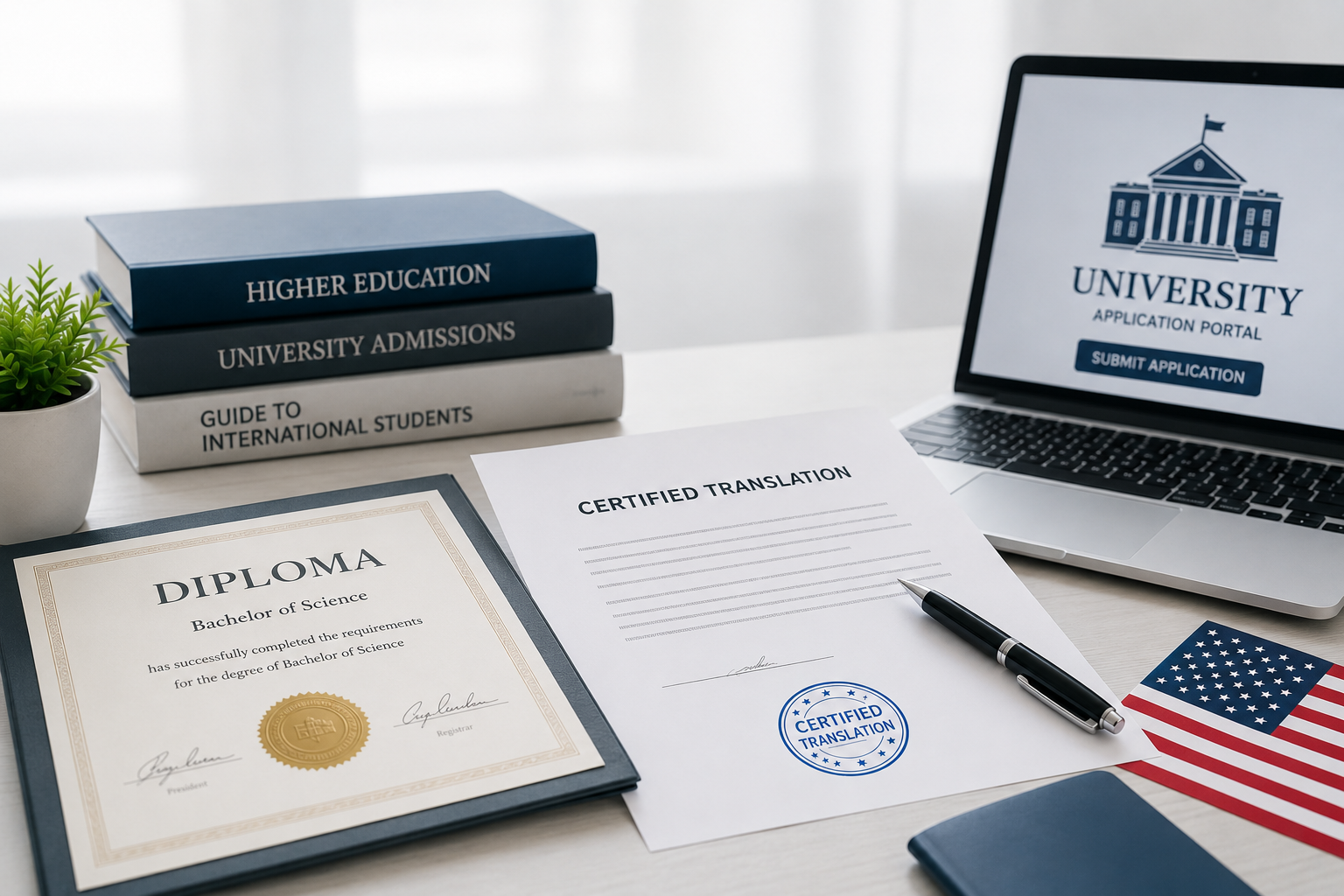
Step-by-Step Process to Translate a Diploma for US University Applications
Knowing the process in advance makes it much easier to translate a diploma for US university submissions without stress. Here is how the typical workflow unfolds from start to finish.
Step One: Gather the Original Document
Before you can translate a diploma for US university admissions, you need a clear, complete copy of the original diploma. This includes the front and back if there is text on both sides, along with any accompanying transcript or academic record. Blurry scans or partial photographs slow down the translator and increase the chance of errors.
Step Two: Choose a Qualified Translation Provider
Not every bilingual person is equipped to translate a diploma for US university documents professionally. Academic translation requires familiarity with grading systems, degree titles, institutional names, and formatting conventions unique to the country of origin. A provider experienced in educational document translation, such as a dedicated agency, will understand how to render your grade point average, honors, and degree classification in a way that US institutions recognize.
Step Three: Translation and Quality Review
Once you submit your documents, the translator will begin work. A reputable company will not just translate a diploma for US university content word for word. Instead, they will preserve the meaning, structure, and formatting of the original while ensuring names, dates, and numbers are transcribed exactly as they appear. Many agencies run a second linguist through the document for quality assurance before it is finalized.
Step Four: Certification Statement
After the translation is complete, the company attaches a signed certification statement. This step is what makes the finished product official when you translate a diploma for US university requirements, since the certification is the piece that universities and agencies rely on to trust the accuracy of the work.
Step Five: Delivery and Submission
Finally, you receive the finished translation, usually as a digital PDF along with a printed and signed hard copy if requested. You can then submit both the original diploma and the translated version together, since most universities require you to translate the diploma for US university applications while still including the source document for comparison.
Tip One: Confirm the Exact Requirements Before You Begin
Every university has slightly different rules. Some ask for a certified translation only. Others want notarization. A few even require an evaluation from an approved credential evaluation service in addition to the translation. Before you translate a diploma for US university admissions, read the international student section of the school’s website carefully or call the admissions office. This single step prevents the most common and costly mistake applicants make.
Tip Two: Understand the Role of Credential Evaluation Services
Many people confuse a translation with a credential evaluation, but they serve different purposes. A translation converts the language of your diploma into English. A credential evaluation compares your foreign degree to the US equivalent, telling the university what your qualification is worth in American terms, such as a bachelor’s or master’s degree equivalency.
Organizations such as World Education Services, known as WES, along with several other approved evaluators, often require you to translate your diploma for US university comparison purposes as part of their evaluation packet. In many cases, you will need both the certified translation and the evaluation report submitted together. Always check whether your target university, employer, or licensing board requires one, the other, or both.
Tip Three: Avoid Machine Translation for Official Submissions
It might be tempting to use free online tools to translate a diploma for US university requirements quickly, especially when facing a tight deadline. This is a mistake that admissions officers see constantly, and it almost always backfires. Machine translation tools frequently mishandle proper nouns, institutional names, and grading scales, producing a document that looks unprofessional or, worse, factually incorrect.
Universities and government agencies can usually tell when a document was run through automated software rather than translated by a qualified linguist. Because there is no certification statement attached to a machine-generated translation, it will simply be rejected. If your goal is to translate a diploma for US university admissions successfully on the first try, always work with a human translator who can provide proper certification.
Tip Four: Keep Formatting Consistent With the Original
A high-quality certified translation should mirror the layout of the original diploma as closely as possible. Seals, signatures, stamps, and logos should be described in brackets rather than omitted, since admissions officers expect to see a complete picture of what appears on the source document. When you translate a diploma for US university submissions, the translator should note things like an official seal or a signature line even though these elements cannot literally be translated into words.
This attention to formatting reassures the reviewing officer that nothing was left out or altered. A translation that looks dramatically different from the original, or that leaves out visual elements entirely, raises red flags and can trigger additional requests for clarification from the university.
Tip Five: Plan for Turnaround Time and Cost
Application deadlines wait for no one, so timing matters when you translate a diploma for US university admissions. Standard turnaround for a single diploma with a professional agency typically ranges from one to three business days, though many companies offer rush service for an additional fee if you need the document faster. Larger orders involving multiple transcripts or supporting documents naturally take longer.
Pricing varies depending on the language pair, document length, and formatting complexity, but a single-page diploma translation from a professional service generally falls within a predictable and affordable range. It is worth comparing a few providers, but be cautious of prices that seem unusually low, since quality and accuracy matter far more than saving a small amount of money on a document tied directly to your academic future.
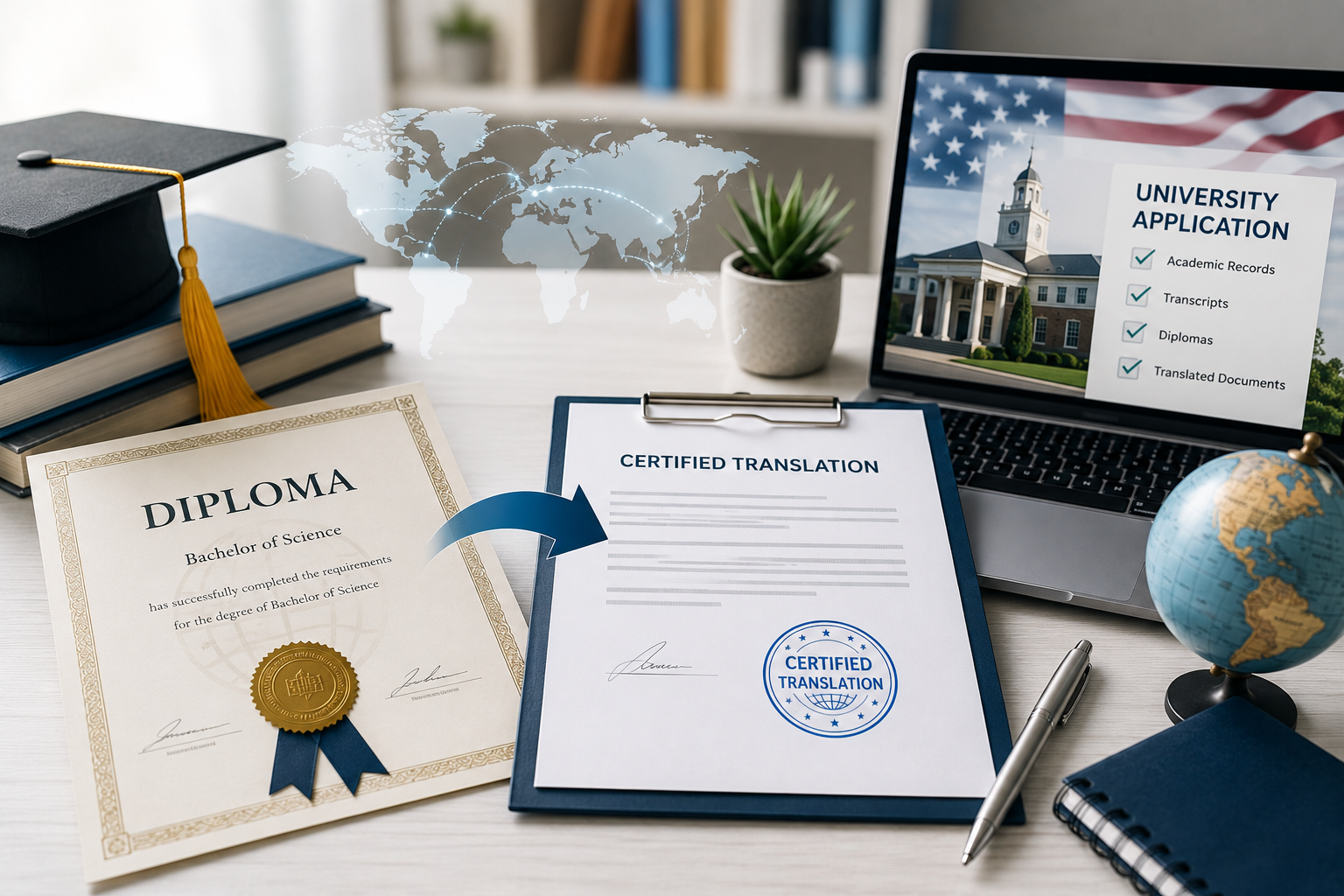
Common Mistakes to Avoid When You Translate a Diploma for US University Files
Even careful applicants make avoidable errors during this process. Watch for the following pitfalls.
First, submitting only the translation without the original diploma. Universities almost always want both documents together so they can compare the translated content to the source material.
Second, assuming a translation done by a family member or friend will be accepted. Even if the translation is accurate, most institutions require certification from a professional translator or agency, not a personal acquaintance, no matter how fluent that person may be.
Third, waiting until the application deadline is near. Rushing the process to translate a diploma for US university requirements at the last minute increases stress and limits your options if an issue arises with the document.
Fourth, forgetting supporting documents such as transcripts, diplomas from multiple institutions, or professional certificates that the university may also require in translated form.
Fifth, choosing a provider without researching their experience in academic translation specifically. General translation skills do not always transfer smoothly to the specialized vocabulary and formatting conventions of educational documents.
How to Choose the Right Service to Translate a Diploma for US University Needs
When selecting a company to translate a diploma for US university applications, look for a few key qualities. The provider should have specific experience with academic and educational documents, not just general business or legal translation. They should offer a clear certification statement that meets the standards commonly accepted by American universities, USCIS, and credential evaluation organizations.
Customer support also matters. A responsive team that can answer questions about formatting, turnaround, or specific university requirements will make the entire experience smoother. Look for transparent pricing with no hidden fees, and ask whether the company offers revisions if a university requests a formatting change after the fact.
Finally, consider whether the provider can handle your specific language pair and whether they are familiar with the educational system of your home country. A translator who understands regional grading scales and degree titles will produce a far more accurate and university-ready document than one working outside their area of expertise.
Frequently Asked Questions
Do I need to translate my diploma for US university applications if my degree was taught in English?
Even if your coursework was taught in English, the diploma itself may have been issued in the official language of your country. If the printed document contains any non-English text, most universities will still ask you to translate the diploma for US university admissions review.
Can I translate a diploma for US university use myself if I am fluent in both languages?
Technically you can attempt it, but most universities will not accept a self-translated document without independent certification. Even fluent bilingual applicants are considered too close to the document to certify their own translation objectively.
How long does it take to translate a diploma for US university submissions?
Most single document translations are completed within one to three business days, though this depends on the provider and whether rush service is requested.
Is a translation the same as a credential evaluation?
No. A translation converts the language of the diploma. An evaluation compares the degree to its US equivalent. Many applicants need to translate a diploma for US university admissions and obtain a separate evaluation report.
What happens if my translated diploma has an error?
Contact your translation provider immediately. Reputable companies will correct legitimate errors at no additional charge, since accuracy is central to the value of a certified translation.
Final Thoughts
Successfully navigating the process to translate a diploma for US university admissions does not have to be overwhelming once you understand what is expected. Confirm the specific requirements of your target school, choose an experienced provider, avoid shortcuts like machine translation, and give yourself enough time before your deadline. Taking these steps will help ensure your academic credentials are recognized quickly and accurately by the institution or agency reviewing your file.
If you are ready to translate a diploma for US university admissions, employment, or licensing purposes, Global Doc Translations offers certified academic translation services designed specifically for international applicants. Our team understands the formatting, terminology, and certification standards that American universities and government agencies expect, helping you move through the application process with confidence.